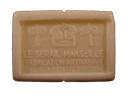
Marseilles soap through the centuries
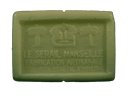
2800 BC Ancient Babylon
Information was found on clay tablet written around 2200 BC shows earliest recorded evidence of soap formula consisting of water, alkali and cassia oil.
1550 BC Ancient Egypt
Ebers Papyrus indicated ancient Egyptians bathed regularly and created soap-like substance from animal and vegetable oils combined with alkaline salts. They also used soap in preparation of wool for weaving.
AD 77
Pliny the Elder's Historia Naturalis discusses soap manufacturing from tallow and ashes but only use mentioned for the substance is as a pomade for hair (used by Gauls and Germans).
7th Century
True soap made from vegetable oils, aromatic oils and lye was first produced by Muslim chemists in the medieval Islamic world.
AD 98
Al-Razi, a Persian chemist, wrote a manuscript on recipes for true soap.
14th century
In 1371 Crescans Davin, known as Sabonerius, introduced soap industry to Marseilles.
15th century
As demand for hand-made soap continued to grow, first industrial soap factories appeared in Marseilles.
16th century
Soap from Venetian factories as well as Castile soap and soap from Marseilles supplied the Mediterranean and European markets.
17th century
Jean-Baptiste Colbert, Marquis de Seignelay, who (like his father) was an influncial politician under Louis XIV created in 1688 an edict that established first regulations concerning manufacturing of soap in Marseilles; these laws are still in force today; among many other things, the Edict of Colbert forbids the use of animal fat and does not allow for work to be performed in June, July or August.
18th century
There were 30 soap factories in Marseilles at the beginning of the century. Most of them closed due to a plague epidemic. By 1730 two types of soap were manufactured: mottled soap (industrial cleanser for housekeeping) and white soap (pure and gentle cleanser for silk merchants, dry cleaner, launderers, perfumers). Marseilles entered it's golden years of soap industry before it was stopped again by the French revolution.
19th century
In 1810, a commission controlling soap making in Marseilles required the factories to use a special kind of oil (linseed, palm oil, sesame seed, groundnut oil) and ammonia soda and to write the name and the address of the factory on the seal.
19th century
In 1810, a commission controlling soap making in Marseilles required the factories to use a special kind of oil (linseed, palm oil, sesame seed, groundnut oil) and ammonia soda and to write the name and the address of the factory on the seal.
20th century
"extra pure oil 72%" stamping of soap is introduced
21th century
The market, which is dominated by harsh artificial detergents, sees a growing interest in true soap. Only three factories continue traditional craft manufacturing of soap in Marseilles.

Terms and Conditions Privacy Policy Contact Us
Copyright © 2025 - Le Serail The French Soap Store Corp.